The Decameron book summary
In Florence in 1348, while the plague empties the city, seven young women and three young men withdraw to a country villa outside town to wait out the epidemic. To pass the time they agree that each of them will tell one story a day for ten days, with a new king or queen chosen every day to set the theme. The hundred tales that follow range from comic tricks and sharp retorts to tragic love affairs, bold adventures, reversals of fortune and acts of generosity, with merchants, noblemen, wives, rogues and fools across Italy and the Mediterranean. Giovanni Boccaccio wrote the book around 1349 to 1353, setting its lively frame story against the grim backdrop of the plague. It became a landmark of Italian prose, and later writers such as Chaucer and Shakespeare borrowed plots from it.
The Decameron at a glance
- Level
- C2
- Language
- English
- Pages
- 711
- Words
- about 297,709
- Unique words
- 13,536
- Estimated reading time
- 20–33 hours
- Formats
- EPUB and PDF
Reading time is an estimate at 150–250 words per minute.
Why this book is useful for C2 English learners
The Decameron is useful for C2 English learners because it gives you demanding prose, layered meaning, unusual phrasing, and vocabulary that may feel literary, historical, or highly specific. As a classic text, it lets you meet vocabulary inside a real reading flow instead of memorizing isolated words.
Vocabulary difficulty
C2 vocabulary can include rare words, formal style, irony, allusion, and subtle shifts in register. Across about 711 pages, Okuzeka helps you slow down only on the words or phrases that block understanding, so the difficulty becomes easier to manage without turning every paragraph into a translation exercise. This makes it a practical C2 vocabulary reading choice.
Recommended reading level
Best for strong readers who want challenging English texts with support only when meaning becomes unclear. If you are looking for C2 English books, this page gives you the book format, page count, category, and reading tools before you add it to your library.
Most common words in The Decameron
The Decameron contains about 297,709 words, 13,536 of them unique. These content words appear most often in the text:
- thou×1381
- lady×949
- thee×798
- love×587
- time×549
- thy×517
- great×507
- man×493
- thus×474
- day×463
- wherefore×457
- good×447
How to read The Decameron with Okuzeka
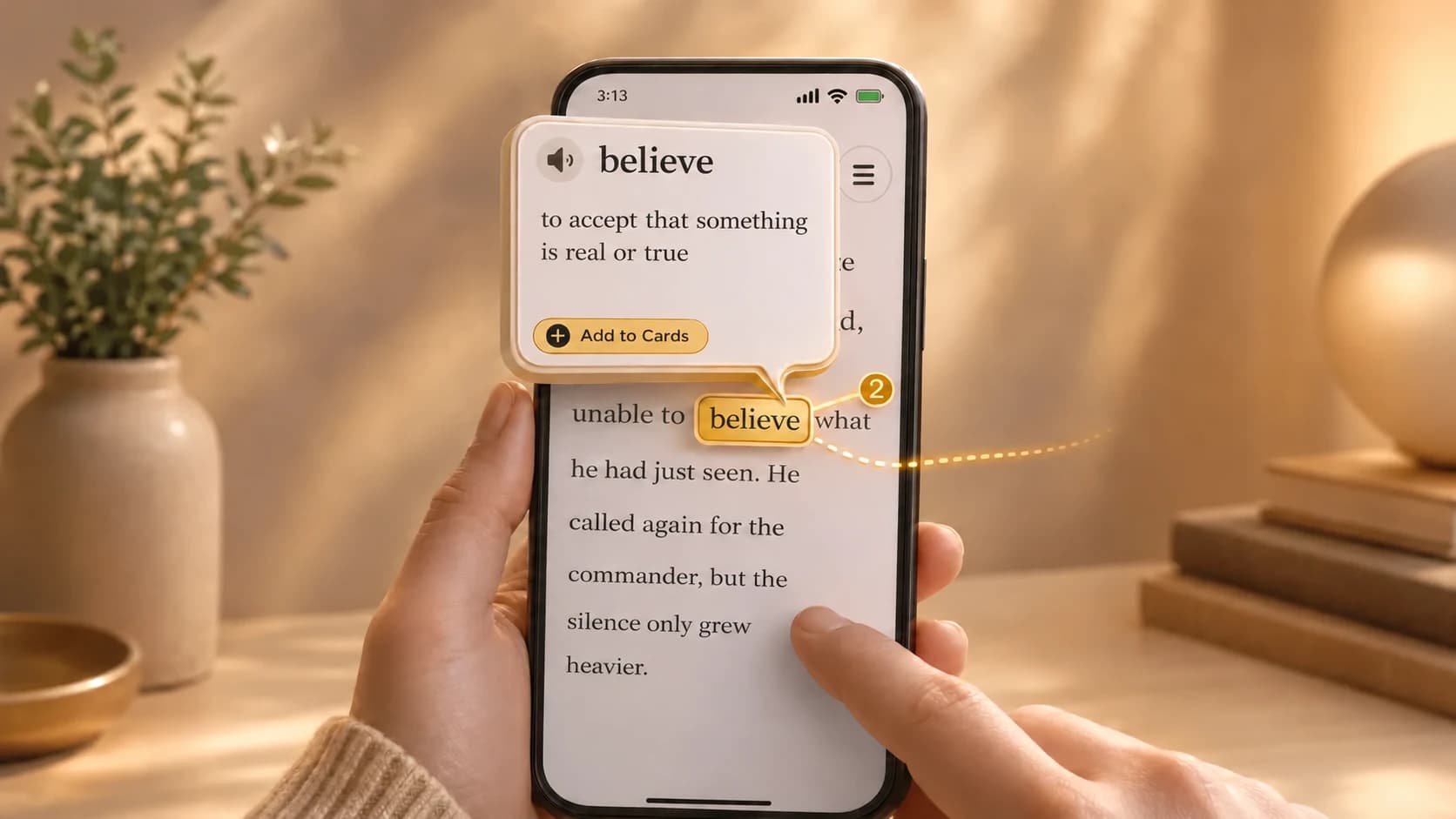
Add The Decameron to your Okuzeka library, open it in the reader, and tap difficult words while you read. Okuzeka shows meanings in the sentence you are reading, lets you save useful vocabulary as flashcards, and keeps the book available across web, iOS, and Android.
- Add the book to your library.
- Read normally and tap only the words that stop you.
- Save useful words as flashcards for later review.
Similar C2 books
The Decameron FAQ
Is The Decameron good for C2 English reading practice?
The Decameron can be used for C2 English reading because you can read the book in Okuzeka, check difficult words in context, and save vocabulary while staying inside the text.
Can I read The Decameron as an EPUB in Okuzeka?
Yes. The Decameron is available as an EPUB book in Okuzeka.
Which words appear most often in The Decameron?
The most frequent content words in the text of The Decameron are: thou, lady, thee, love, time, thy, great, man, thus, day. The book contains about 297,709 words in total, 13,536 of them unique. While reading in Okuzeka you can tap any of these words to see the meaning they have in that sentence.
How long does it take to read The Decameron?
The Decameron has about 297,709 words. At a reading speed of 150 to 250 words per minute, that is roughly 20–33 hours of reading. This is an estimate: your own pace, and stopping to look up words, will change it.
Which formats is The Decameron available in?
The Decameron is available as EPUB and PDF. Reading it in the Okuzeka web reader, with tap-to-translate and flashcards, needs a free account.
How should I read The Decameron with Okuzeka?
Read normally first, tap only the words or phrases that stop you, and save the useful ones as flashcards. This keeps EPUB and PDF reading close to real book reading instead of constant dictionary switching.