Tap-to-translate should solve the sentence, not only the word
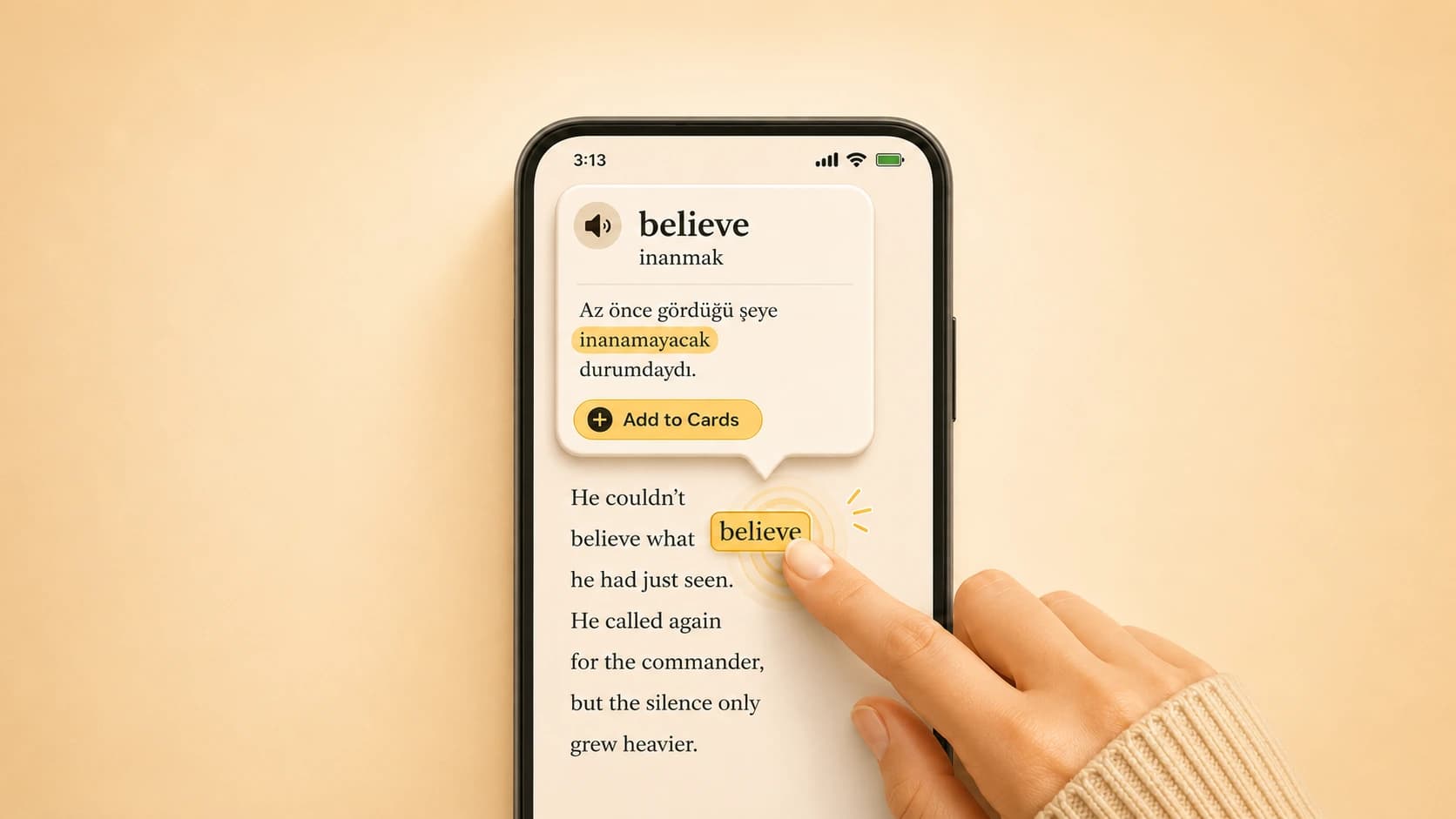
A single English word can have several unrelated meanings. If a reader shows only the first dictionary entry, you still have to guess which meaning the author intended. Okuzeka uses the surrounding sentence when explaining the selected word or phrase.
That distinction is useful for phrasal verbs, idioms, figurative language, technical terms, and ordinary words whose meaning changes with context. The goal is to understand the line you are reading, not to collect every possible definition.
Stay inside the book instead of switching tools
The usual lookup process breaks concentration: select text, copy it, open another app, choose a language, compare answers, and then find your place again. Tap-to-translate brings the answer to the point where the question appeared.
Okuzeka keeps the book, the selected expression, the explanation, and the save-to-cards action in one flow. This is especially valuable during longer reading sessions, where small interruptions quickly add up.
Use it with your own PDF and EPUB books
You are not limited to short sample lessons. Upload a supported PDF or EPUB from your own library, or choose a title from the Okuzeka catalog. Text-based files generally work better than scanned pages because the words can be selected and understood more reliably.
This lets learners practice with novels, graded readers, essays, course material, and nonfiction they already care about. The reading assistance follows the book instead of forcing the book into a separate exercise.
Turn useful lookups into vocabulary practice
Not every unknown word deserves a flashcard. First read the contextual explanation, then save the word only if it seems useful. The resulting deck reflects the books you actually read and the language that genuinely slowed you down.
This connects extensive reading with active review. You keep moving through the story in the moment and return later to the smaller set of vocabulary that mattered.