The Argonautica book summary
King Pelias of Iolcus, who fears a prophecy of his own doom, sends the young hero Jason to fetch the Golden Fleece from distant Colchis. Jason gathers the Argonauts, among them Heracles, Orpheus and the twins Castor and Polydeuces, and sails in the ship Argo through perils such as the stay on Lemnos and the clashing rocks. In Colchis the king’s daughter Medea, a sorceress, falls in love with Jason, helps him through tasks that seem impossible and flees with him carrying the fleece. The poem in four books is the work of Apollonius Rhodius, a Greek poet who worked in Alexandria in the third century BC, and it is one of the few epics of its age to survive complete. Its portrait of Medea’s passion influenced Virgil’s Dido.
The Argonautica at a glance
- Level
- C2
- Language
- English
- Pages
- 143
- Words
- about 61,204
- Unique words
- 6,162
- Estimated reading time
- 4–7 hours
- Formats
- EPUB and PDF
Reading time is an estimate at 150–250 words per minute.
Why this book is useful for C2 English learners
The Argonautica is useful for C2 English learners because it gives you demanding prose, layered meaning, unusual phrasing, and vocabulary that may feel literary, historical, or highly specific. As a classic text, it lets you meet vocabulary inside a real reading flow instead of memorizing isolated words.
Vocabulary difficulty
C2 vocabulary can include rare words, formal style, irony, allusion, and subtle shifts in register. Across about 143 pages, Okuzeka helps you slow down only on the words or phrases that block understanding, so the difficulty becomes easier to manage without turning every paragraph into a translation exercise. This makes it a practical C2 vocabulary reading choice.
Recommended reading level
Best for strong readers who want challenging English texts with support only when meaning becomes unclear. If you are looking for C2 English books, this page gives you the book format, page count, category, and reading tools before you add it to your library.
Most common words in The Argonautica
The Argonautica contains about 61,204 words, 6,162 of them unique. These content words appear most often in the text:
- son×230
- thou×182
- sea×165
- spake×162
- thy×149
- ship×146
- land×145
- thus×139
- men×119
- heroes×108
- forth×107
- far×106
How to read The Argonautica with Okuzeka
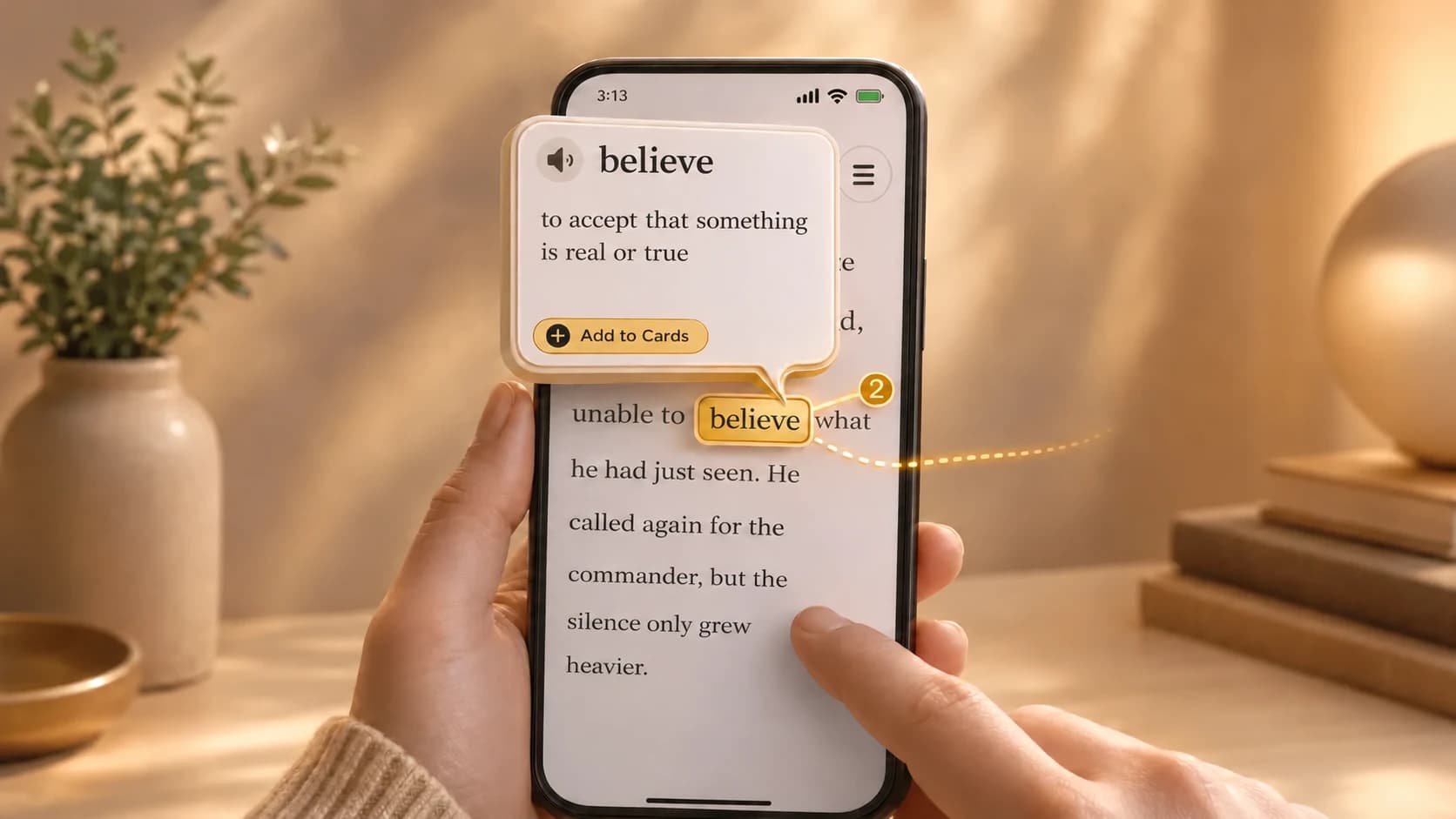
Add The Argonautica to your Okuzeka library, open it in the reader, and tap difficult words while you read. Okuzeka shows meanings in the sentence you are reading, lets you save useful vocabulary as flashcards, and keeps the book available across web, iOS, and Android.
- Add the book to your library.
- Read normally and tap only the words that stop you.
- Save useful words as flashcards for later review.
Similar C2 books
The Argonautica FAQ
Is The Argonautica good for C2 English reading practice?
The Argonautica can be used for C2 English reading because you can read the book in Okuzeka, check difficult words in context, and save vocabulary while staying inside the text.
Can I read The Argonautica as an EPUB in Okuzeka?
Yes. The Argonautica is available as an EPUB book in Okuzeka.
Which words appear most often in The Argonautica?
The most frequent content words in the text of The Argonautica are: son, thou, sea, spake, thy, ship, land, thus, men, heroes. The book contains about 61,204 words in total, 6,162 of them unique. While reading in Okuzeka you can tap any of these words to see the meaning they have in that sentence.
How long does it take to read The Argonautica?
The Argonautica has about 61,204 words. At a reading speed of 150 to 250 words per minute, that is roughly 4–7 hours of reading. This is an estimate: your own pace, and stopping to look up words, will change it.
Which formats is The Argonautica available in?
The Argonautica is available as EPUB and PDF. Reading it in the Okuzeka web reader, with tap-to-translate and flashcards, needs a free account.
How should I read The Argonautica with Okuzeka?
Read normally first, tap only the words or phrases that stop you, and save the useful ones as flashcards. This keeps EPUB and PDF reading close to real book reading instead of constant dictionary switching.