New Atlantis book summary
Lost in the South Sea on a voyage from Peru toward China and Japan, a ship’s company reaches Bensalem, a hidden island kingdom unknown to Europe. Its people receive the exhausted strangers with courtesy, lodge them in a special house and send officials to question them before the governor explains how the kingdom keeps itself secluded. The narrator learns about the island’s laws, its customs of family and hospitality, and its greatest institution, Salomon’s House, a college devoted to knowing the causes of things and widening human power over nature. One of its fathers describes the work done there, from deep caves and tall towers to machines, medicines and new foods. Francis Bacon wrote this early utopian fable around 1623, and it was published in 1627, after his death; it breaks off unfinished. It is often read as a vision of organised scientific research.
New Atlantis at a glance
- Level
- C2
- Language
- English
- Pages
- 37
- Words
- about 15,692
- Unique words
- 2,736
- Estimated reading time
- 63–105 minutes
- Formats
- EPUB and PDF
Reading time is an estimate at 150–250 words per minute.
Why this book is useful for C2 English learners
New Atlantis is useful for C2 English learners because it gives you demanding prose, layered meaning, unusual phrasing, and vocabulary that may feel literary, historical, or highly specific. As a science fiction text, it lets you meet vocabulary inside a real reading flow instead of memorizing isolated words.
Vocabulary difficulty
C2 vocabulary can include rare words, formal style, irony, allusion, and subtle shifts in register. Across about 37 pages, Okuzeka helps you slow down only on the words or phrases that block understanding, so the difficulty becomes easier to manage without turning every paragraph into a translation exercise. This makes it a practical C2 vocabulary reading choice.
Recommended reading level
Best for strong readers who want challenging English texts with support only when meaning becomes unclear. If you are looking for C2 English books, this page gives you the book format, page count, category, and reading tools before you add it to your library.
Most common words in New Atlantis
New Atlantis contains about 15,692 words, 2,736 of them unique. These content words appear most often in the text:
- great×45
- land×37
- divers×34
- men×34
- things×28
- time×28
- give×26
- good×26
- call×25
- house×25
- man×25
- people×25
How to read New Atlantis with Okuzeka
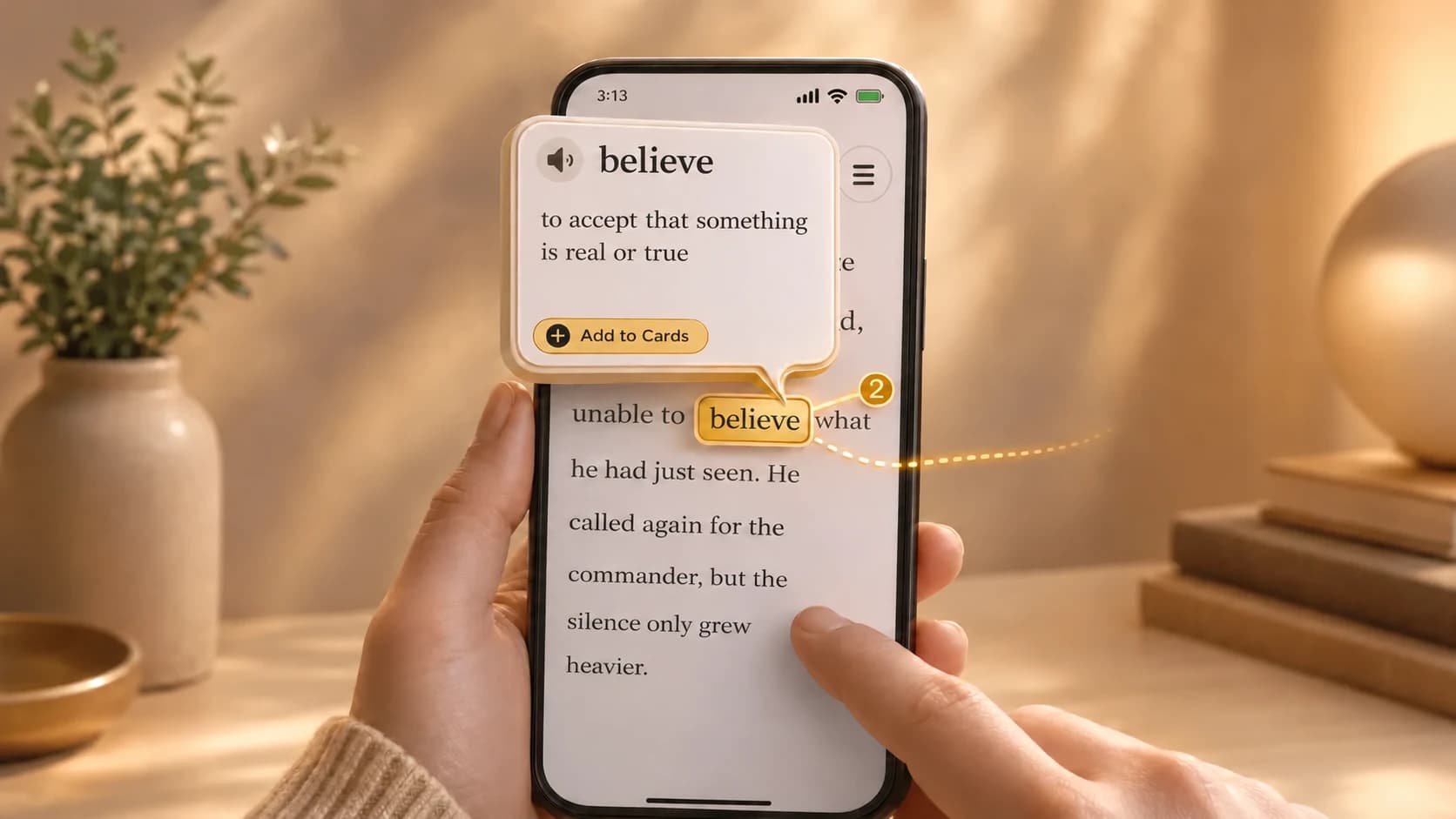
Add New Atlantis to your Okuzeka library, open it in the reader, and tap difficult words while you read. Okuzeka shows meanings in the sentence you are reading, lets you save useful vocabulary as flashcards, and keeps the book available across web, iOS, and Android.
- Add the book to your library.
- Read normally and tap only the words that stop you.
- Save useful words as flashcards for later review.
Similar C2 books
New Atlantis FAQ
Is New Atlantis good for C2 English reading practice?
New Atlantis can be used for C2 English reading because you can read the book in Okuzeka, check difficult words in context, and save vocabulary while staying inside the text.
Can I read New Atlantis as an EPUB in Okuzeka?
Yes. New Atlantis is available as an EPUB book in Okuzeka.
Which words appear most often in New Atlantis?
The most frequent content words in the text of New Atlantis are: great, land, divers, men, things, time, give, good, call, house. The book contains about 15,692 words in total, 2,736 of them unique. While reading in Okuzeka you can tap any of these words to see the meaning they have in that sentence.
How long does it take to read New Atlantis?
New Atlantis has about 15,692 words. At a reading speed of 150 to 250 words per minute, that is roughly 63–105 minutes of reading. This is an estimate: your own pace, and stopping to look up words, will change it.
Which formats is New Atlantis available in?
New Atlantis is available as EPUB and PDF. Reading it in the Okuzeka web reader, with tap-to-translate and flashcards, needs a free account.
How should I read New Atlantis with Okuzeka?
Read normally first, tap only the words or phrases that stop you, and save the useful ones as flashcards. This keeps EPUB and PDF reading close to real book reading instead of constant dictionary switching.