Can Such Things Be? book summary
Ghosts, disappearances and uncertain perceptions disturb ordinary lives in Ambrose Bierce’s collection of supernatural tales. Soldiers, travelers and isolated witnesses encounter events that resist the explanations they first seem to offer. A familiar landscape may conceal an unseen threat, while a memory or a voice can unsettle the boundary between the living and the dead. Shifting accounts and abrupt revelations repeatedly put the reliability of observation in doubt. The stories combine horror, irony and psychological uncertainty, often drawing on the experience of war and the isolation of the American frontier.
Can Such Things Be? at a glance
- Level
- C1
- Language
- English
- Pages
- 219
- Words
- about 77,791
- Unique words
- 8,627
- Estimated reading time
- 5–8.5 hours
- Formats
- EPUB and PDF
Reading time is an estimate at 150–250 words per minute.
Why this book is useful for C1 English learners
Can Such Things Be? is useful for C1 English learners because it gives you complex sentences, subtle tone, abstract vocabulary, and longer passages that reward slow, careful reading. As a classic text, it lets you meet vocabulary inside a real reading flow instead of memorizing isolated words.
Vocabulary difficulty
C1 vocabulary often includes literary wording, precise verbs, abstract nouns, and expressions that change meaning by tone. Across about 219 pages, Okuzeka helps you slow down only on the words or phrases that block understanding, so the difficulty becomes easier to manage without turning every paragraph into a translation exercise. This makes it a practical C1 vocabulary reading choice.
Recommended reading level
Best for advanced readers who want to grow range, precision, and comfort with authentic English prose. If you are looking for C1 English books, this page gives you the book format, page count, category, and reading tools before you add it to your library.
Most common words in Can Such Things Be?
Can Such Things Be? contains about 77,791 words, 8,627 of them unique. These content words appear most often in the text:
- man×219
- house×128
- night×116
- time×112
- eyes×110
- know×105
- seemed×103
- way×103
- dead×100
- door×99
- face×96
- light×94
How to read Can Such Things Be? with Okuzeka
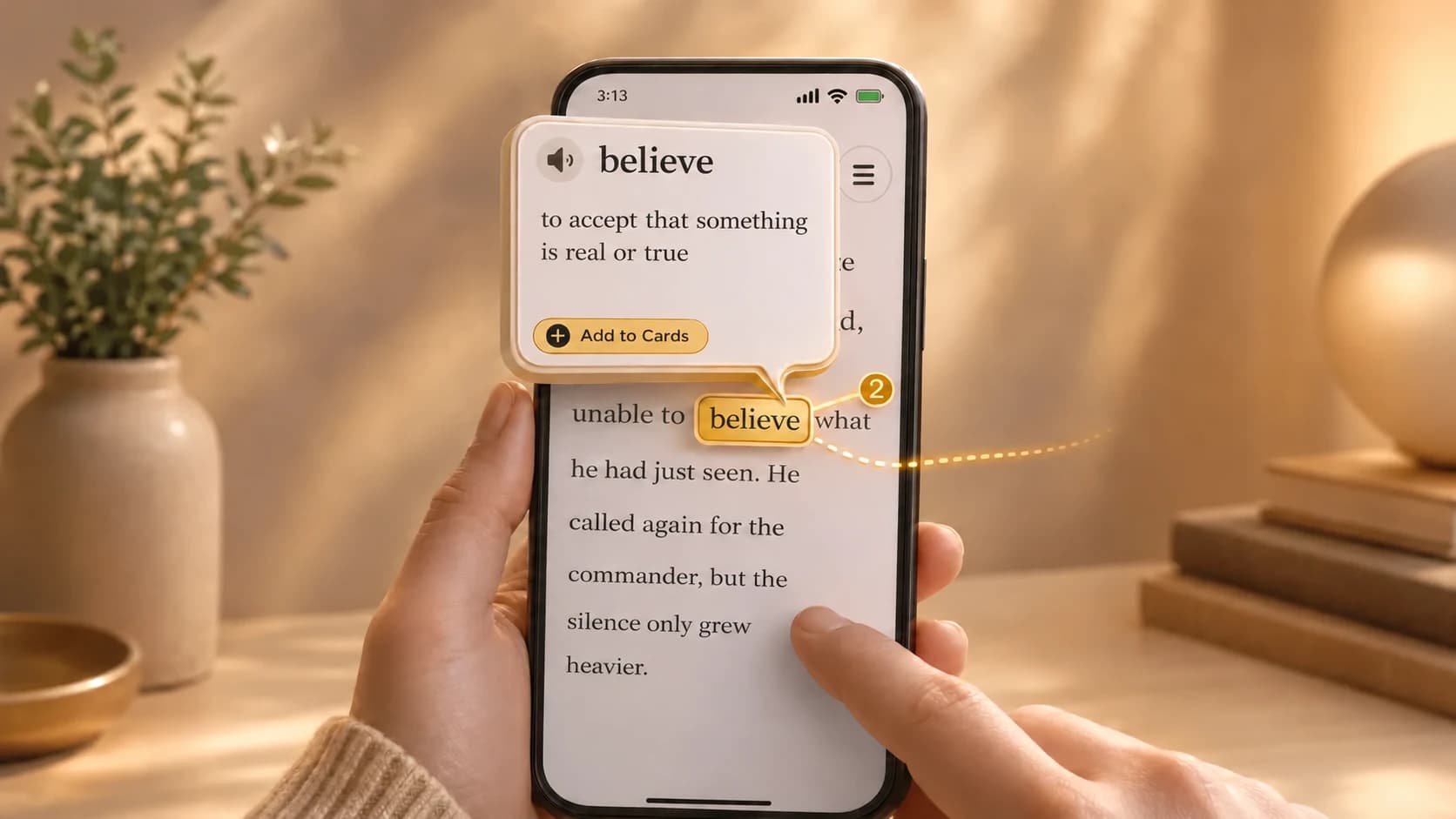
Add Can Such Things Be? to your Okuzeka library, open it in the reader, and tap difficult words while you read. Okuzeka shows meanings in the sentence you are reading, lets you save useful vocabulary as flashcards, and keeps the book available across web, iOS, and Android.
- Add the book to your library.
- Read normally and tap only the words that stop you.
- Save useful words as flashcards for later review.
Similar C1 books
More by Ambrose Bierce
Next step: C2 English books
Can Such Things Be? FAQ
Is Can Such Things Be? good for C1 English reading practice?
Can Such Things Be? can be used for C1 English reading because you can read the book in Okuzeka, check difficult words in context, and save vocabulary while staying inside the text.
Can I read Can Such Things Be? as an EPUB in Okuzeka?
Yes. Can Such Things Be? is available as an EPUB book in Okuzeka.
Which words appear most often in Can Such Things Be??
The most frequent content words in the text of Can Such Things Be? are: man, house, night, time, eyes, know, seemed, way, dead, door. The book contains about 77,791 words in total, 8,627 of them unique. While reading in Okuzeka you can tap any of these words to see the meaning they have in that sentence.
How long does it take to read Can Such Things Be??
Can Such Things Be? has about 77,791 words. At a reading speed of 150 to 250 words per minute, that is roughly 5–8.5 hours of reading. This is an estimate: your own pace, and stopping to look up words, will change it.
Which formats is Can Such Things Be? available in?
Can Such Things Be? is available as EPUB and PDF. Reading it in the Okuzeka web reader, with tap-to-translate and flashcards, needs a free account.
How should I read Can Such Things Be? with Okuzeka?
Read normally first, tap only the words or phrases that stop you, and save the useful ones as flashcards. This keeps EPUB and PDF reading close to real book reading instead of constant dictionary switching.