What the vocabulary level checker does
The checker reads your text word by word, finds each word's dictionary form and looks up its CEFR level. You get the share of the text at each level, a column of words for every level, and the number of words above a level you choose.
Unlike the CEFR text level checker, which focuses on the level of the text as a whole, this tool is about the words: which ones to teach, which ones to learn and which ones to replace.
Who it is for
- Teachers pull out the B2 and C1 words of a reading text to pre-teach them before a lesson.
- Learners find the words above their level in an article or chapter and add them to their flashcards.
- Writers and editors simplify text for a target audience by spotting words above, say, B1.
- Exam candidates collect level-appropriate vocabulary from practice texts for exams such as Cambridge B2 First or IELTS.
Why "words above your level" matters
Reading research suggests you need to know about 95% of the running words in a text to understand it adequately, and 98% to read it comfortably. If you choose your level in the checker, the result shows how many words in the text are above it and what share of the text they make up. Under 2% means the text is a comfortable read; over 5% means it will feel hard without help.
A short list of words above your level is also the most efficient study list there is: they are words you have just met in context and are likely to meet again.
How levels are assigned
A1 to B2 levels come from the CEFR-J Wordlist and C1 to C2 levels from the Octanove Vocabulary Profile. Words that appear in neither list get a level estimated from their frequency. Capitalized words the list does not know are treated as names and left out, and numbers are ignored.
Levels describe the most common meaning of a word. A word used in an unusual sense, or in an idiom, can be harder than its level suggests.
| Sample text | A1–A2 words | B1–B2 words | C1–C2 and unlisted |
|---|---|---|---|
| A weekend by the sea (A2) | 97% | 2% | 1% |
| Why we remember stories (B2) | 85% | 14% | 1% |
| The paradox of choice (C1) | 59% | 34% | 7% |
Turn word lists into learning
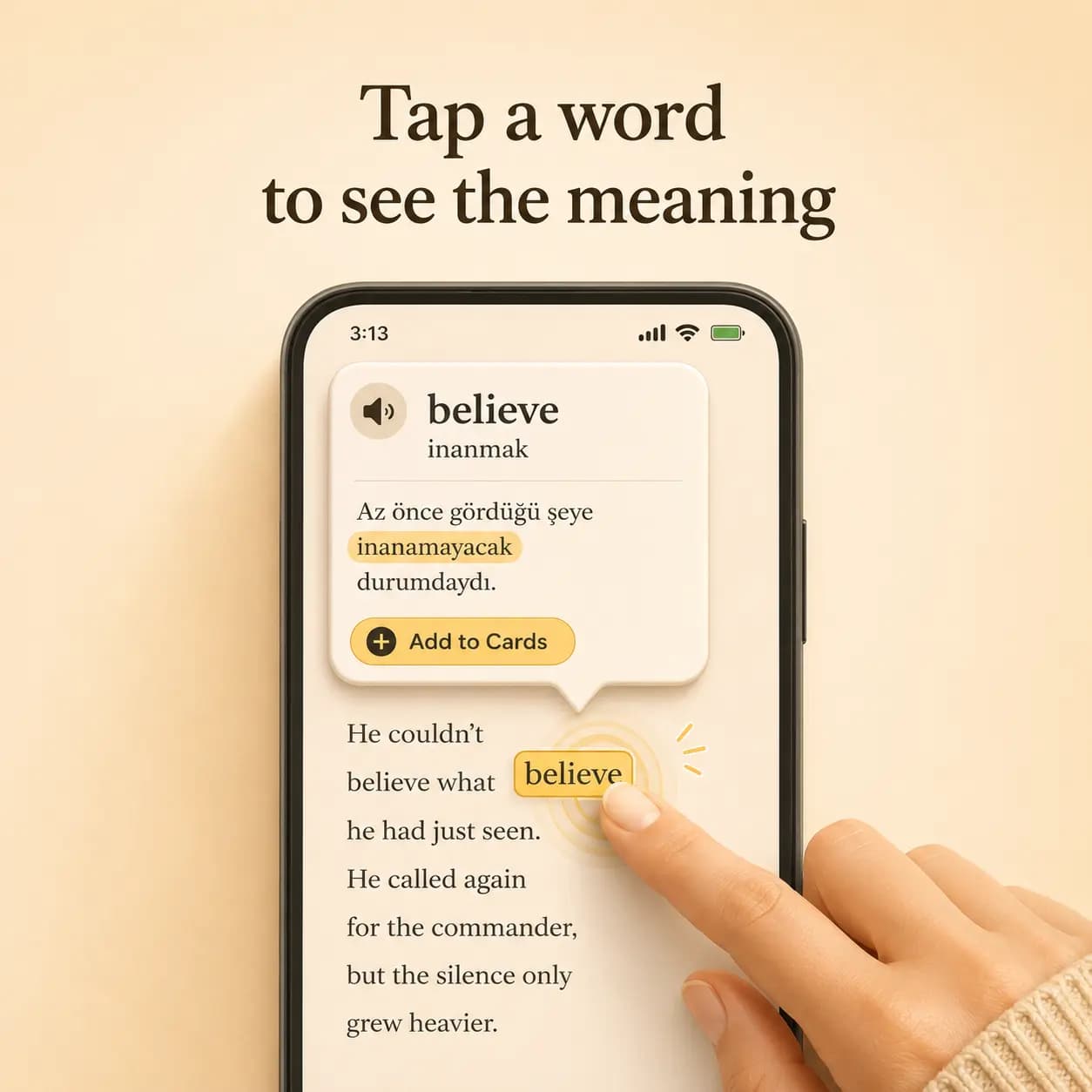
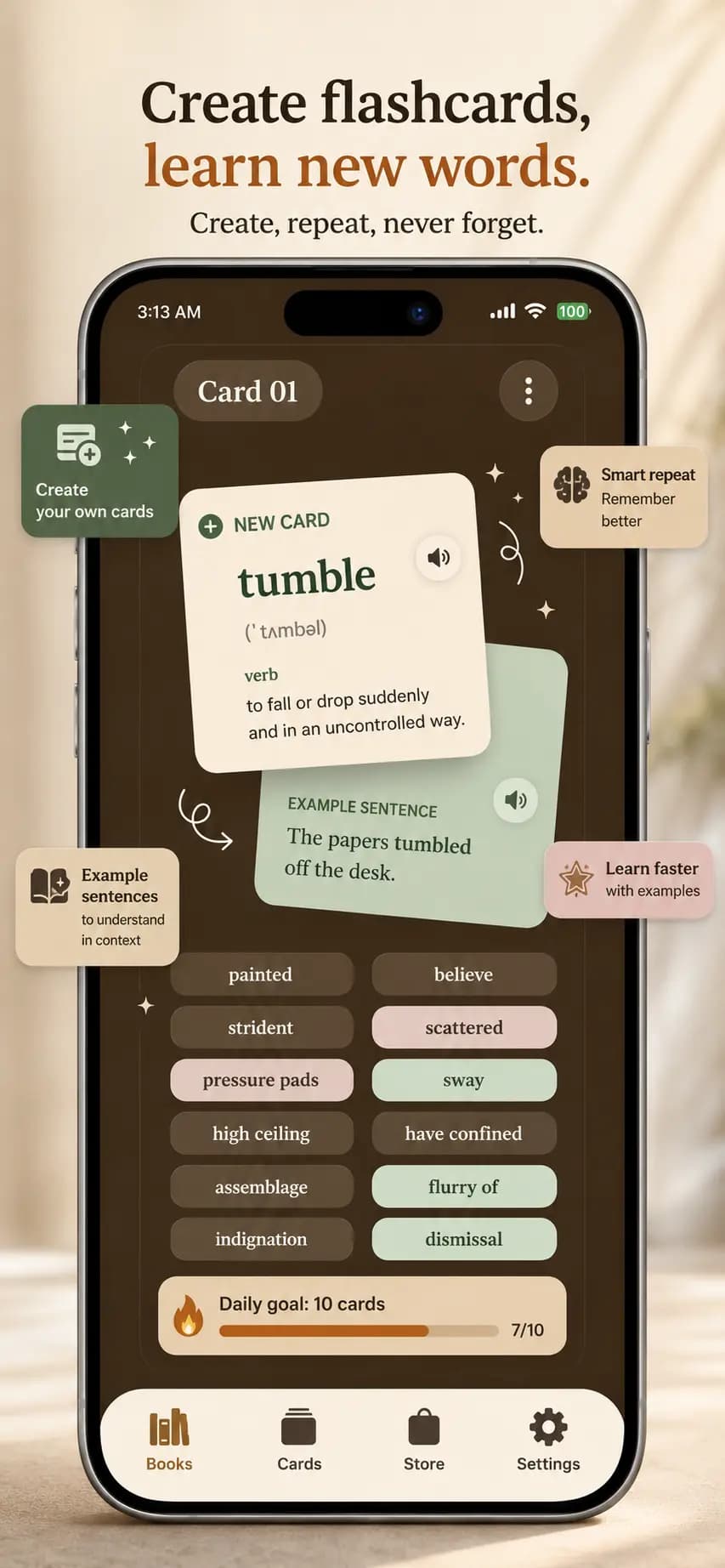
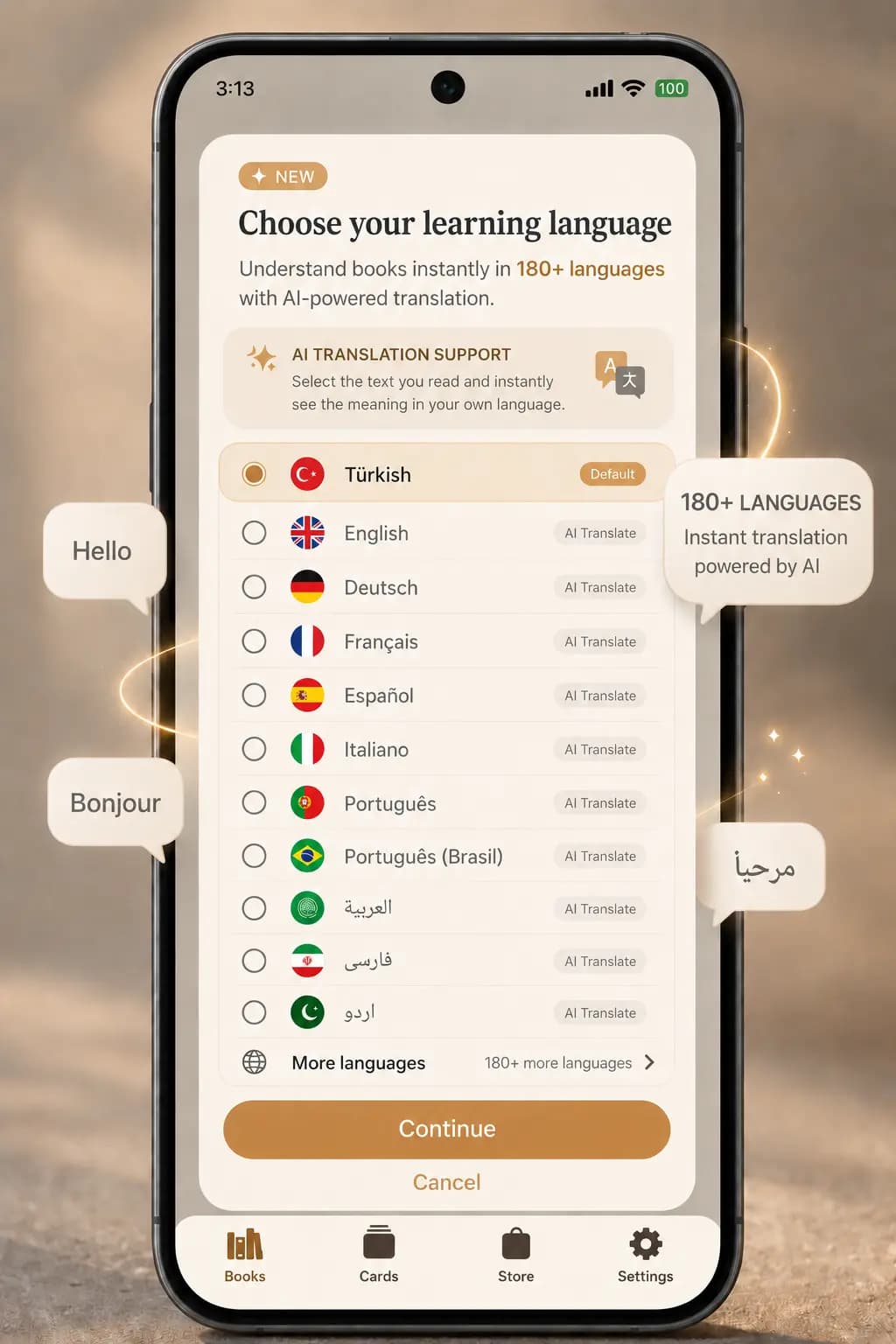
A list is only the start. Words are remembered when they are reviewed several times, ideally with the sentence where you found them. Copy the list of words above your level, or read the text in Okuzeka, where you can tap each word to see its meaning in context and save it as a flashcard with its sentence.