CEFR A1 · Beginner · 1,047 words

A1 English Vocabulary List

Every A1 word in the CEFR-J Wordlist, sorted by how common it is in real English. Test how many you already know, search the list and copy the words you want to learn.

  • 1,047 words
  • Sorted by frequency
  • 1-minute self-test
  • Free

How many A1 words do you know?

See 20 random words from this list (plus a few made-up ones) and find out what share of the 1,047 A1 words you already know. It takes about a minute.

All 1,047 A1 words

Loading the list…

What A1 vocabulary means

A1 learners understand and use familiar everyday expressions and very basic phrases: introducing themselves, asking where someone lives, talking about family, food, time and prices. The A1 list is the core of English: articles, pronouns, numbers, days, common verbs such as have, go and like, and the nouns of daily life.

The 1,000 or so A1 words are also the most frequent words in English. In an ordinary novel they make up around two thirds of every page, which is why learning them first pays off more than any other list.

The 100 most common A1 words

These are the words on the A1 list you will meet most often in real English texts. Start with them.

  1. the
  2. to
  3. and
  4. of
  5. a
  6. in
  7. I
  8. is
  9. that
  10. for
  11. you
  12. it
  13. on
  14. with
  15. was
  16. this
  17. be
  18. as
  19. have
  20. are
  21. at
  22. he
  23. not
  24. by
  25. but
  26. from
  27. my
  28. we
  29. or
  30. an
  31. your
  32. so
  33. all
  34. get
  35. his
  36. they
  37. one
  38. me
  39. if
  40. can
  41. will
  42. like
  43. just
  44. make
  45. go
  46. about
  47. up
  48. out
  49. what
  50. say
  51. has
  52. when
  53. more
  54. do
  55. no
  56. who
  57. were
  58. had
  59. their
  60. there
  61. her
  62. which
  63. time
  64. would
  65. year
  66. she
  67. new
  68. people
  69. take
  70. how
  71. see
  72. other
  73. know
  74. some
  75. them
  76. also
  77. want
  78. now
  79. think
  80. come
  81. its
  82. our
  83. look
  84. than
  85. need
  86. good
  87. only
  88. day
  89. first
  90. after
  91. him
  92. into
  93. two
  94. work
  95. over
  96. any
  97. then
  98. could
  99. back
  100. way

A1 words by part of speech

Part of speechMost common examples
Nounsmake, go, say, time, year, people, take, want, look, day
Verbsis, was, be, have, are, get, like, make, go, say
Adjectivesnew, good, only, first, back, well, right, very, great, off
Adverbsin, that, on, not, so, all, just, about, up, out

How many words do you need for A1?

This list has 1,047 words. Together, the lists from A1 to A1 contain 1,047 words. The CEFR itself does not define word counts; these figures are the size of the CEFR-J and Octanove lists. Your real vocabulary also includes names, new words and specialist words that no list covers.

To measure your overall vocabulary, take the English vocabulary size test; it also estimates your CEFR level.

How to learn A1 words

Learn A1 words in small groups by topic (family, food, home, time) and meet them again in very simple stories. Picture books and A1 graded readers recycle the same words on every page.

  1. Use the self-test above to see what share of the A1 words you already know.
  2. Pick one of the free A1 English books and start reading.
  3. Tap any word you don't know in Okuzeka to see its meaning in that sentence, in your language.
  4. Save useful words as flashcards with their sentences and review them over the next few days.
  5. When you score above 85%, move on to the A2 list.

Where this list comes from

The A1–B2 words come from the CEFR-J Wordlist, compiled by the CEFR-J project at Tokyo University of Foreign Studies.

Okuzeka kept the single-word headwords and sorted them by word frequency. Other lists, such as the Cambridge English Vocabulary Profile or the Oxford 3000/5000, may give some words a different level, and a word's level can depend on the meaning being taught.
Read with Okuzeka

Learn A1 words inside A1 books

These tools show you where you are. Okuzeka helps you move up: read books at your level, understand unknown words instantly and keep them with flashcards.

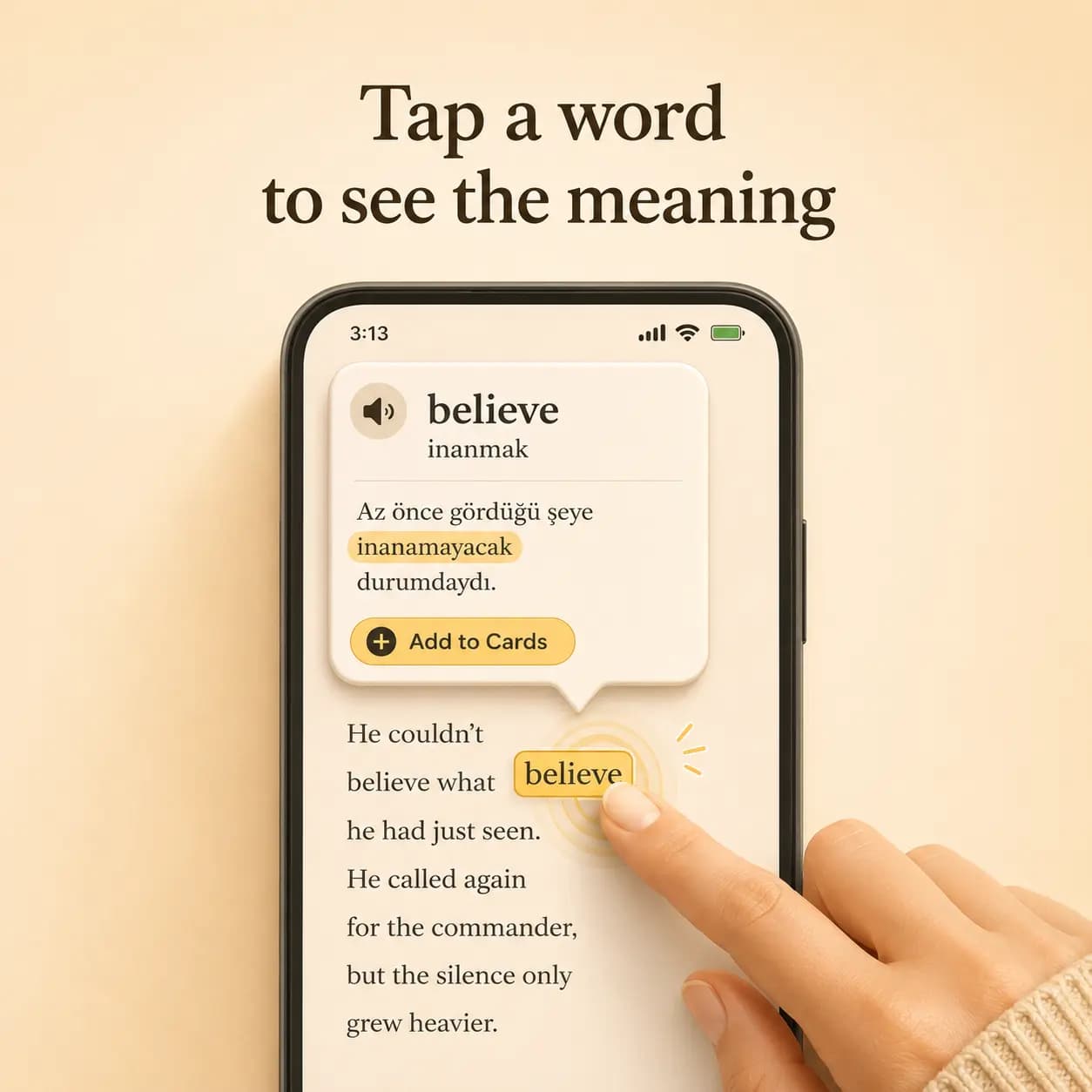
Okuzeka reader showing the meaning of a tapped word
Tap a word, see the meaningOkuzeka explains the word as it is used in that sentence, not a list of every dictionary meaning.
Okuzeka flashcards with an example sentence
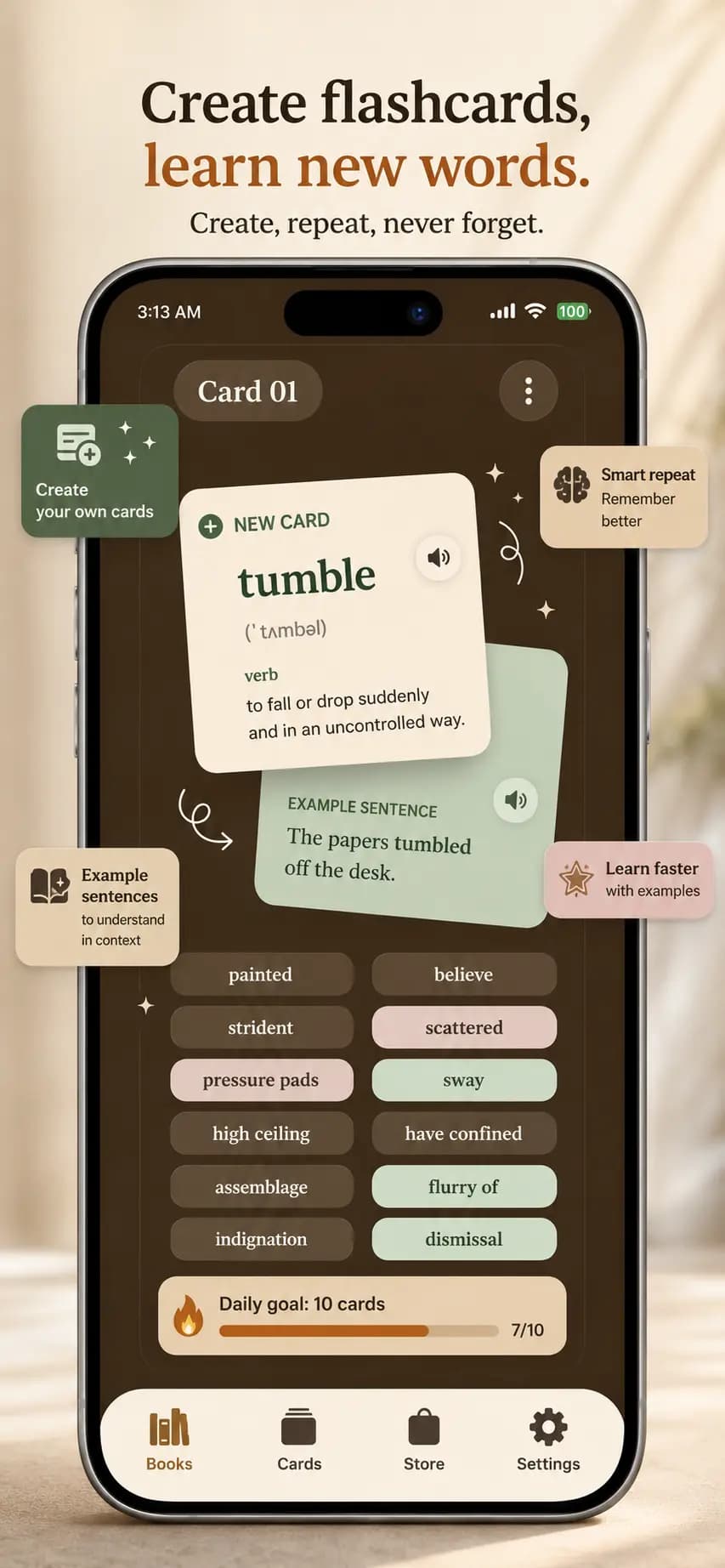
Turn new words into flashcardsEvery word you save keeps its example sentence, so you review it in the context where you met it.
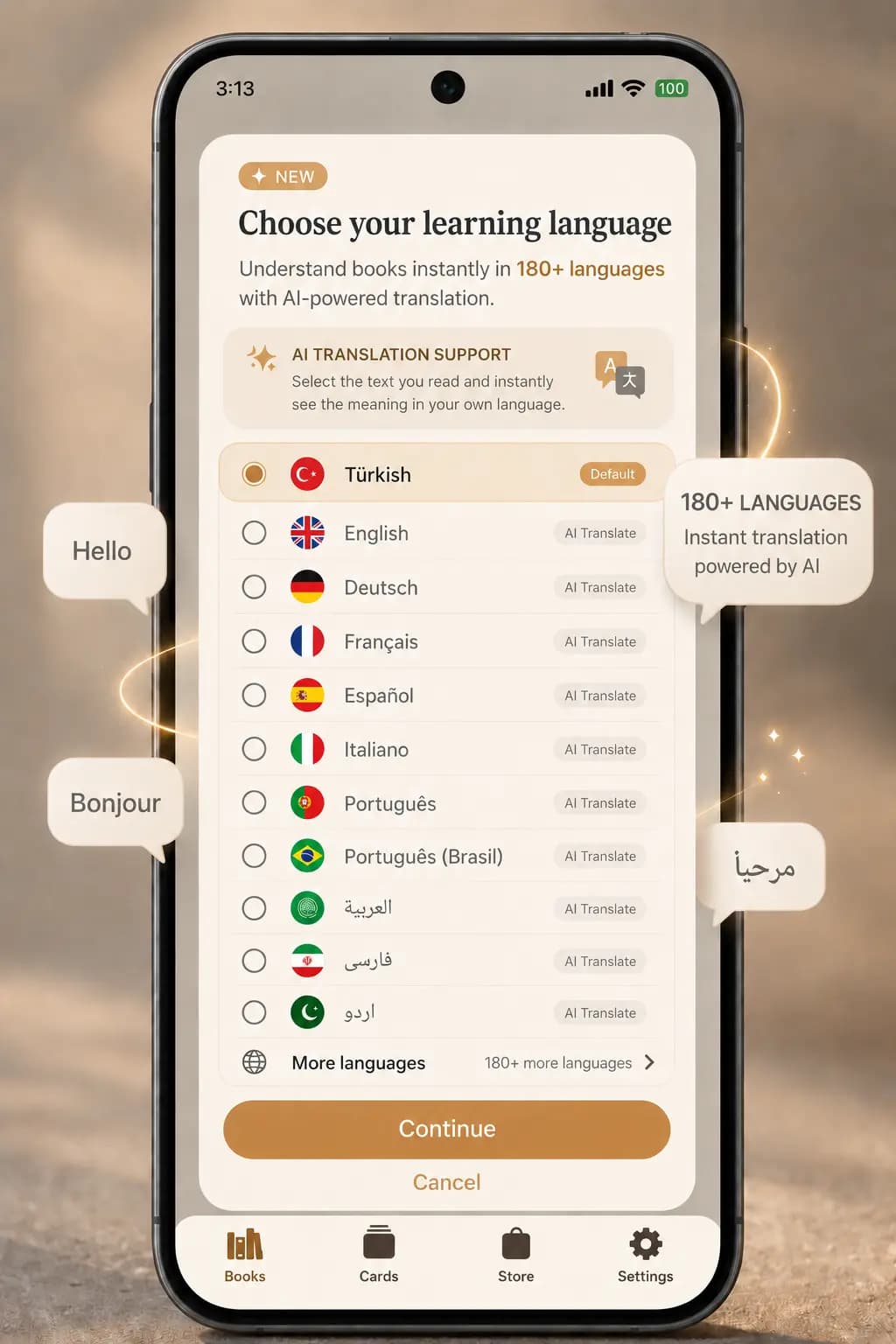
Choosing a translation language in Okuzeka
Explanations in 180+ languagesChoose your own language for meanings and translations, from Turkish and Spanish to Arabic and Japanese.
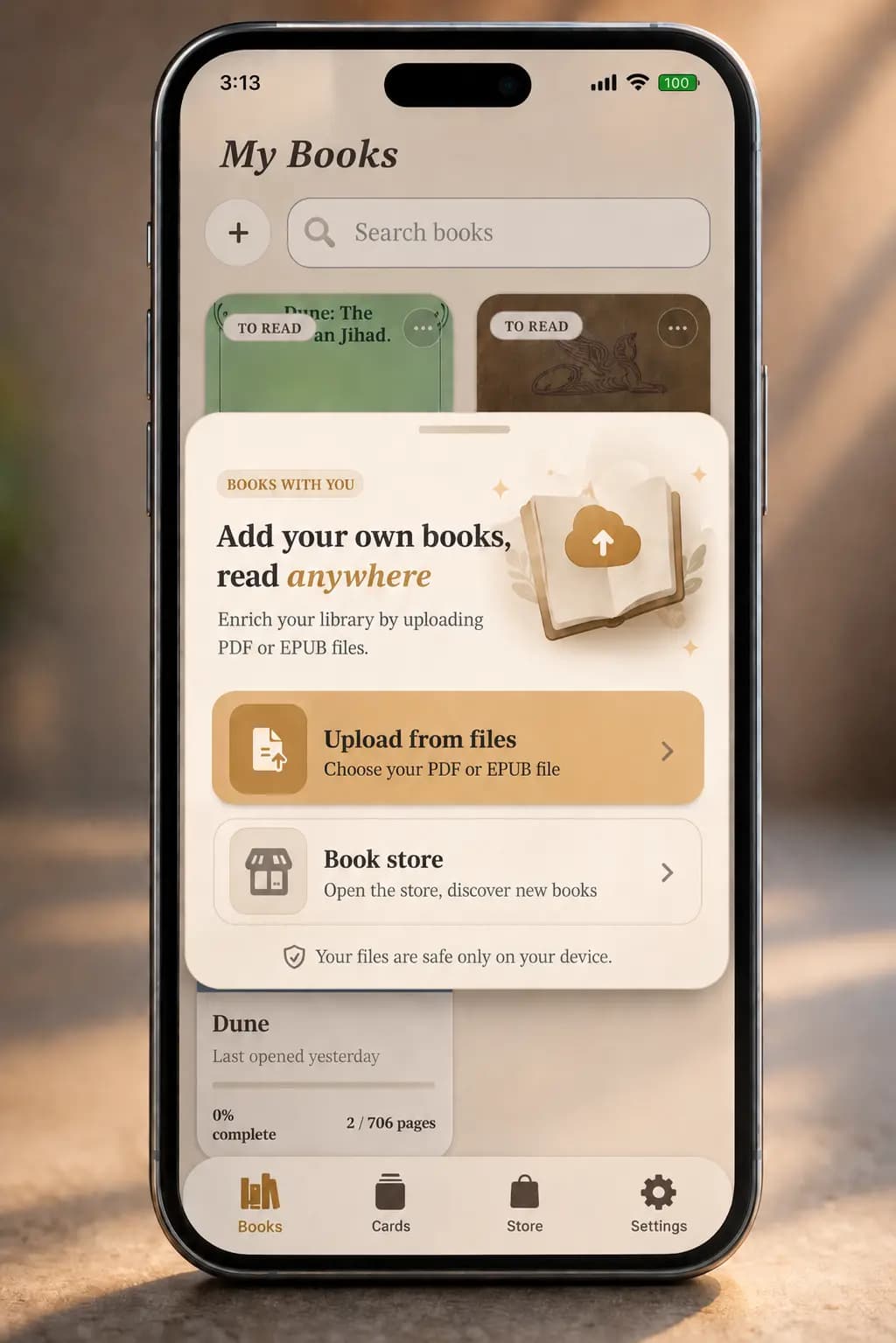
Adding your own PDF or EPUB books in Okuzeka
Free books or your own PDFsStart with free graded books from A1 to C2, or upload the PDF and EPUB files you already have.
FAQ

Frequently asked questions

How many words are in the A1 list?

1,047 single-word headwords. From A1 to A1 the lists contain 1,047 words in total.

Can I download the A1 word list?

Yes. Use the copy button to copy the whole list, or the words you filtered, and paste them into your own word list or flashcard app.

Is this the official Cambridge or Oxford list?

No. It is based on the CEFR-J and Octanove word lists. Cambridge and Oxford publish their own lists, which may level some words differently.

How long does it take to learn the A1 words?

It depends mostly on how much you read. Twenty minutes a day at your level means meeting A1 words many times, and those repeated meetings are what make words stick, far more than a list.

How can I check the level of a single word?

Type it into the English word level checker to see its level, frequency and meaning.

Read at your level

Free A1 English books

You will meet the words on this list most often in A1 books. They are free on Okuzeka, and you can tap any word to see its meaning. Check the level of a word.

Sources and data
  • A1–B2: The CEFR-J Wordlist Version 1.5, compiled by Yukio Tono, Tokyo University of Foreign Studies (free for commercial use with citation).
  • Frequency order: wordfreq by Robyn Speer (CC BY-SA 4.0).