The Lost Backpack book summary
Anna is a young girl who loves school and writing stories in her notebook. One day, she brings her favorite backpack to school, but after playing outside, she cannot find it. She feels worried and a little scared because her important notebook is inside.
With the help of her best friend Leo, Anna looks everywhere in the school. They search the classroom, the hallway, and finally the playground. After a long search, they find the backpack on a bench where Anna left it.
Anna feels happy and relieved. She learns to be more careful with her things and understands how important it is to have a good friend who helps in difficult moments. It is a simple but meaningful story about responsibility, friendship, and problem-solving.
The Lost Backpack at a glance
- Level
- A2
- Language
- English
- Pages
- 5
- Words
- about 674
- Unique words
- 259
- Estimated reading time
- 3–4 minutes
- Formats
- EPUB
Reading time is an estimate at 150–250 words per minute.
Why this book is useful for A2 English learners
The Lost Backpack is useful for A2 English learners because it gives you clear story movement, common verbs, practical descriptions, and enough repetition to make reading feel steady. As a general text, it lets you meet vocabulary inside a real reading flow instead of memorizing isolated words.
Vocabulary difficulty
A2 vocabulary usually includes everyday actions, basic connectors, simple descriptions, and common phrases. Across about 5 pages, Okuzeka helps you slow down only on the words or phrases that block understanding, so the difficulty becomes easier to manage without turning every paragraph into a translation exercise. This makes it a practical A2 vocabulary reading choice.
Recommended reading level
Best for readers who know the basics and want longer but still manageable English stories. If you are looking for A2 English books, this page gives you the book format, page count, category, and reading tools before you add it to your library.
Most common words in The Lost Backpack
The Lost Backpack contains about 674 words, 259 of them unique. These content words appear most often in the text:
- anna×19
- leo×15
- backpack×10
- okuzeka×8
- day×6
- looks×6
- pdf×6
- classroom×5
- look×5
- notebook×5
- dönüştürücüsü×4
- ile×4
How to read The Lost Backpack with Okuzeka
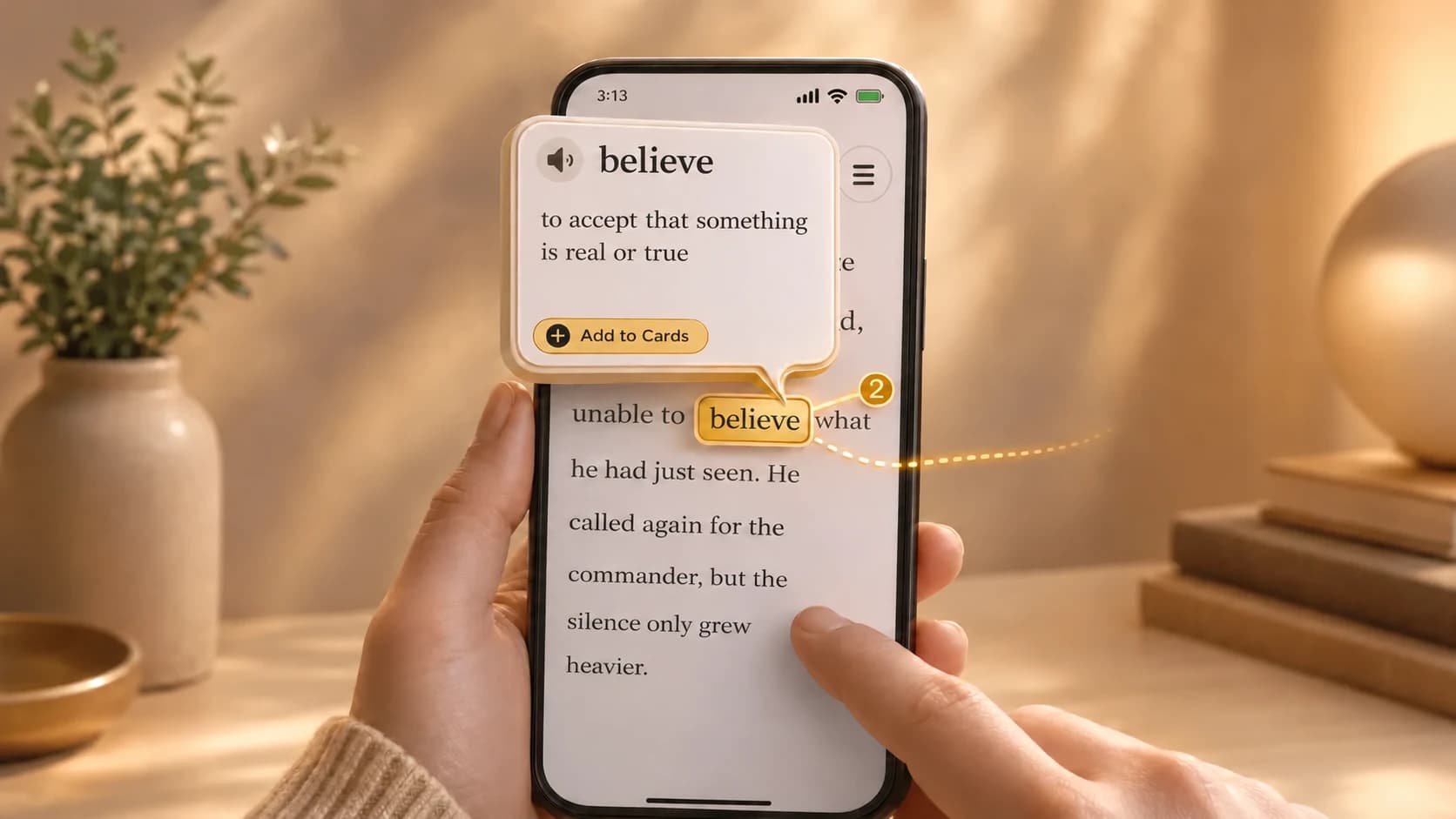
Add The Lost Backpack to your Okuzeka library, open it in the reader, and tap difficult words while you read. Okuzeka shows meanings in the sentence you are reading, lets you save useful vocabulary as flashcards, and keeps the book available across web, iOS, and Android.
- Add the book to your library.
- Read normally and tap only the words that stop you.
- Save useful words as flashcards for later review.
Similar A2 books
Next step: B1 English books
The Lost Backpack FAQ
Is The Lost Backpack good for A2 English reading practice?
The Lost Backpack can be used for A2 English reading because you can read the book in Okuzeka, check difficult words in context, and save vocabulary while staying inside the text.
Can I read The Lost Backpack as an EPUB in Okuzeka?
Yes. The Lost Backpack is available as an EPUB book in Okuzeka.
Which words appear most often in The Lost Backpack?
The most frequent content words in the text of The Lost Backpack are: anna, leo, backpack, okuzeka, day, looks, pdf, classroom, look, notebook. The book contains about 674 words in total, 259 of them unique. While reading in Okuzeka you can tap any of these words to see the meaning they have in that sentence.
How long does it take to read The Lost Backpack?
The Lost Backpack has about 674 words. At a reading speed of 150 to 250 words per minute, that is roughly 3–4 minutes of reading. This is an estimate: your own pace, and stopping to look up words, will change it.
Which formats is The Lost Backpack available in?
The Lost Backpack is available as EPUB. Reading it in the Okuzeka web reader, with tap-to-translate and flashcards, needs a free account.
How should I read The Lost Backpack with Okuzeka?
Read normally first, tap only the words or phrases that stop you, and save the useful ones as flashcards. This keeps EPUB reading close to real book reading instead of constant dictionary switching.