The Great Gatsby book summary
The Great Gatsby by F. Scott Fitzgerald is a classic American novel that explores themes of love, ambition, wealth, identity, and the pursuit of the American Dream. Set during the 1920s, a period known as the Jazz Age, the novel presents a world of luxury, parties, and social competition while revealing the loneliness and disappointment hidden beneath the surface.
The story is narrated by Nick Carraway, a young man who moves to Long Island after starting a new job in the bond business. Nick lives near Jay Gatsby, a wealthy and mysterious man famous for hosting large and extravagant parties at his mansion. Many people attend Gatsby’s events, but few people truly know who he is or how he became so successful. Nick becomes curious about Gatsby and slowly discovers the secrets behind his unusual lifestyle.
Gatsby’s life is strongly connected to Daisy Buchanan, a woman he loved many years earlier. Daisy is Nick’s cousin and is now married to Tom Buchanan, a rich and powerful man from an old-money family. Gatsby believes that his wealth and success will allow him to reunite with Daisy and recreate the happiness they once shared. However, their relationship becomes complicated because of the passage of time, social differences, and the reality of their current lives.
Throughout the novel, Fitzgerald examines the contrast between old wealth and new wealth, showing how society values status and appearance. Gatsby represents ambition and hope, but his dream of returning to the past reveals the dangers of holding onto unrealistic expectations. The characters struggle with love, loyalty, and the pressure to maintain a perfect image.
The novel also provides a critical view of the American Dream. Fitzgerald suggests that material success and wealth cannot always bring happiness or emotional fulfillment. Behind the glamorous parties and expensive lifestyles, the characters experience emptiness, conflict, and personal disappointment.
The Great Gatsby remains one of the most influential novels in American literature because of its powerful storytelling, symbolic details, and unforgettable characters. The novel continues to attract readers with its exploration of dreams, relationships, ambition, and the challenges of searching for a meaningful life.
This page is designed for readers who search for The Great Gatsby EPUB, The Great Gatsby summary, and B2 English books. You can compare the book level, page count, category, and download options before adding it to your library.
Why this book is useful for B2 English learners
The Great Gatsby is useful for B2 English learners because it gives you longer passages, richer description, flexible word meanings, idioms, and more natural literary phrasing. As a classic text, it lets you meet vocabulary inside a real reading flow instead of memorizing isolated words.
Vocabulary difficulty
B2 vocabulary can include figurative language, older expressions, topic-specific words, and phrases whose meaning depends on context. Across about 213 pages, Okuzeka helps you slow down only on the words or phrases that block understanding, so the difficulty becomes easier to manage without turning every paragraph into a translation exercise. This makes it a practical B2 vocabulary reading choice.
Recommended reading level
Best for readers who understand normal English texts but still need help with nuance, idioms, and denser sentences. If you are looking for B2 English books, this page gives you the book format, page count, category, and reading tools before you add it to your library.
Most common words in The Great Gatsby
The Great Gatsby contains about 48,606 words, 6,060 of them unique. These content words appear most often in the text:
- gatsby×198
- tom×176
- daisy×150
- man×109
- know×98
- don’t×96
- house×94
- eyes×87
- didn’t×86
- looked×86
- old×82
- see×82
Words readers look up most
While reading this book in Okuzeka, readers most often tap these words to check their meaning:
- dignified under×2
- people×2
- In consequence×1
- have feigned×1
- impressionability×1
- inclined to×1
- nothing to×1
- nothing to do×1
How to read The Great Gatsby with Okuzeka
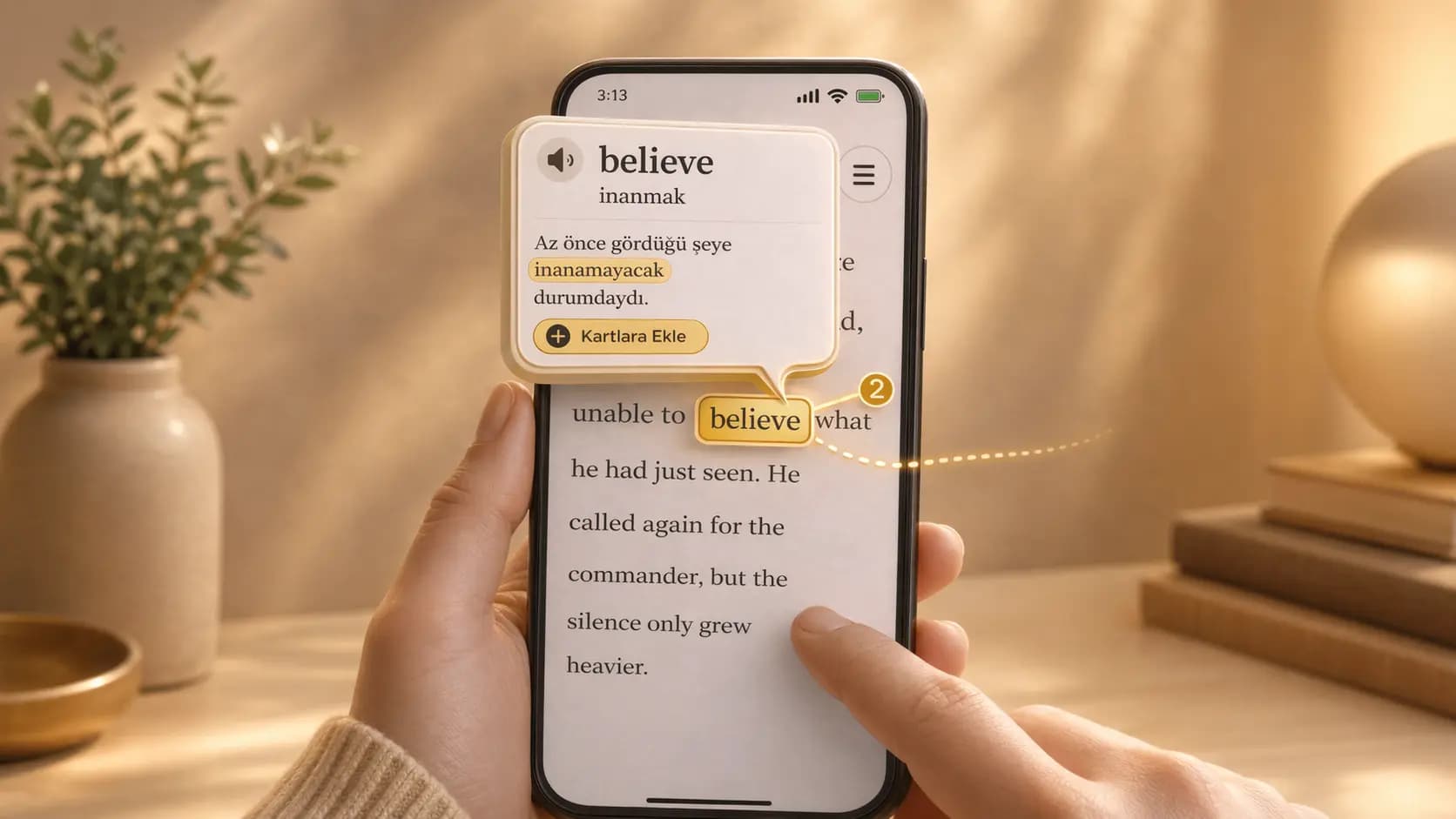
Add The Great Gatsby to your Okuzeka library, open it in the reader, and tap difficult words while you read. Okuzeka shows meanings in the sentence you are reading, lets you save useful vocabulary as flashcards, and keeps the book available across web, iOS, and Android.
- Add the book to your library.
- Read normally and tap only the words that stop you.
- Save useful words as flashcards for later review.
Similar B2 books
The Great Gatsby FAQ
Is The Great Gatsby good for B2 English reading practice?
The Great Gatsby can be used for B2 English reading because you can read the book in Okuzeka, check difficult words in context, and save vocabulary while staying inside the text.
Can I read The Great Gatsby as an EPUB in Okuzeka?
Yes. The Great Gatsby is available as an EPUB book in Okuzeka.
Which words appear most often in The Great Gatsby?
The most frequent content words in the text of The Great Gatsby are: gatsby, tom, daisy, man, know, don’t, house, eyes, didn’t, looked. The book contains about 48,606 words in total, 6,060 of them unique. While reading in Okuzeka you can tap any of these words to see the meaning they have in that sentence.
How difficult is the vocabulary in The Great Gatsby?
B2 vocabulary can include figurative language, older expressions, topic-specific words, and phrases whose meaning depends on context. Across about 213 pages, Okuzeka helps you slow down only on the words or phrases that block understanding, so the difficulty becomes easier to manage without turning every paragraph into a translation exercise. This makes it a practical B2 vocabulary reading choice.
What level is recommended for The Great Gatsby?
Best for readers who understand normal English texts but still need help with nuance, idioms, and denser sentences. If you are looking for B2 English books, this page gives you the book format, page count, category, and reading tools before you add it to your library.
How should I read The Great Gatsby with Okuzeka?
Read normally first, tap only the words or phrases that stop you, and save the useful ones as flashcards. This keeps EPUB reading close to real book reading instead of constant dictionary switching.