The short answer
Most English learners know somewhere between 1,000 and 10,000 English words. Beginners usually recognize under 1,500 of the most frequent words, intermediate learners 3,000–5,000, and advanced learners 6,500 or more. The check above tells you where you are in that range.
| You recognize about… | What it usually means |
|---|---|
| Under 1,500 words | Beginner (A1): simple phrases and very short texts |
| 1,500–2,750 | Elementary (A2): everyday topics and graded readers |
| 2,750–4,250 | Intermediate (B1): most conversations, simplified books |
| 4,250–6,500 | Upper intermediate (B2): online articles, young adult novels |
| 6,500–9,500 | Advanced (C1): most modern novels with a few look-ups |
| 9,500+ | Proficient (C2): literary and specialist texts |
What counts as "knowing" a word?
In this check, a word counts as known if you would understand it when you read it. Linguists call this receptive knowledge. Your productive vocabulary, the words you actually use when you speak or write, is usually much smaller, often around half of your receptive vocabulary.
Many words also have several meanings. If you know the common meaning of spring (the season) but not spring as in a metal coil, you still know the word for this check. Saying "yes" because a word looks familiar is different: if you are not sure what it means, choose "No".
How many words do native English speakers know?
Estimates have changed with better methods. Goulden, Nation and Read (1990) estimated about 17,000 word families for educated native speakers. A large online study by Brysbaert and colleagues (2016) put the average 20-year-old American native speaker at about 42,000 lemmas, rising with age and reading habits.
You do not need anything close to that to enjoy English. The 3,000 most frequent words make up the large majority of what you read and hear every day, and around 8,000–9,000 word families let you read most novels with only occasional help.
How this quick check works
English words are ranked from most to least frequent. You see three words from each of 11 frequency bands, from the top 1,000 to words ranked 15,000–20,000, plus five made-up words. The share of real words you know in each band is corrected for guessing and multiplied by the size of the band, which gives your total.
With 38 answers, the result is quick but approximate. For a more precise number, take the full vocabulary size test, which adds a second stage of words around your level.
How to raise your number
Words stick when you meet them several times in meaningful contexts. Reading books just above your level is the most reliable way to get those repeated meetings. Start with books at your estimated level, look up only the words that block your understanding, and save the ones you want to remember.
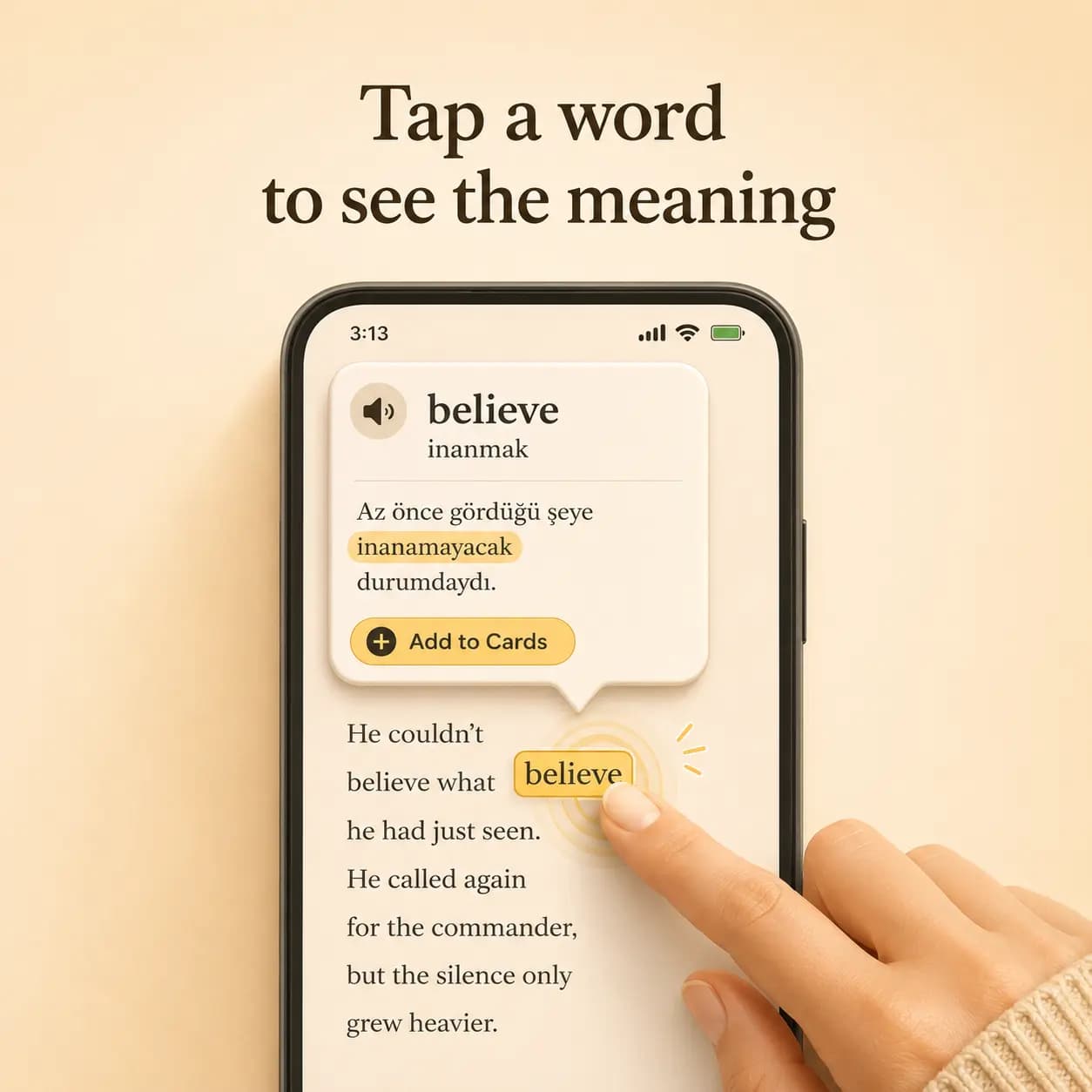
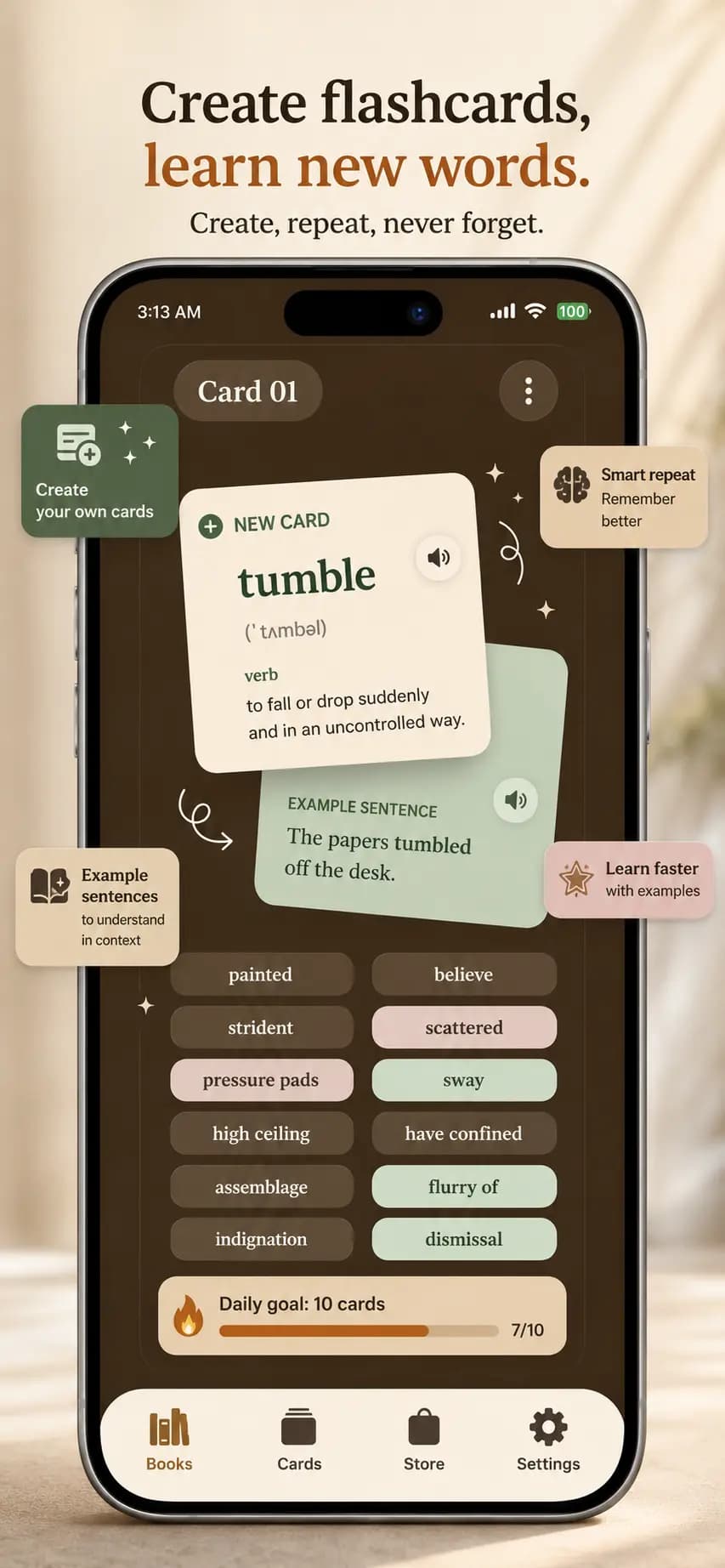
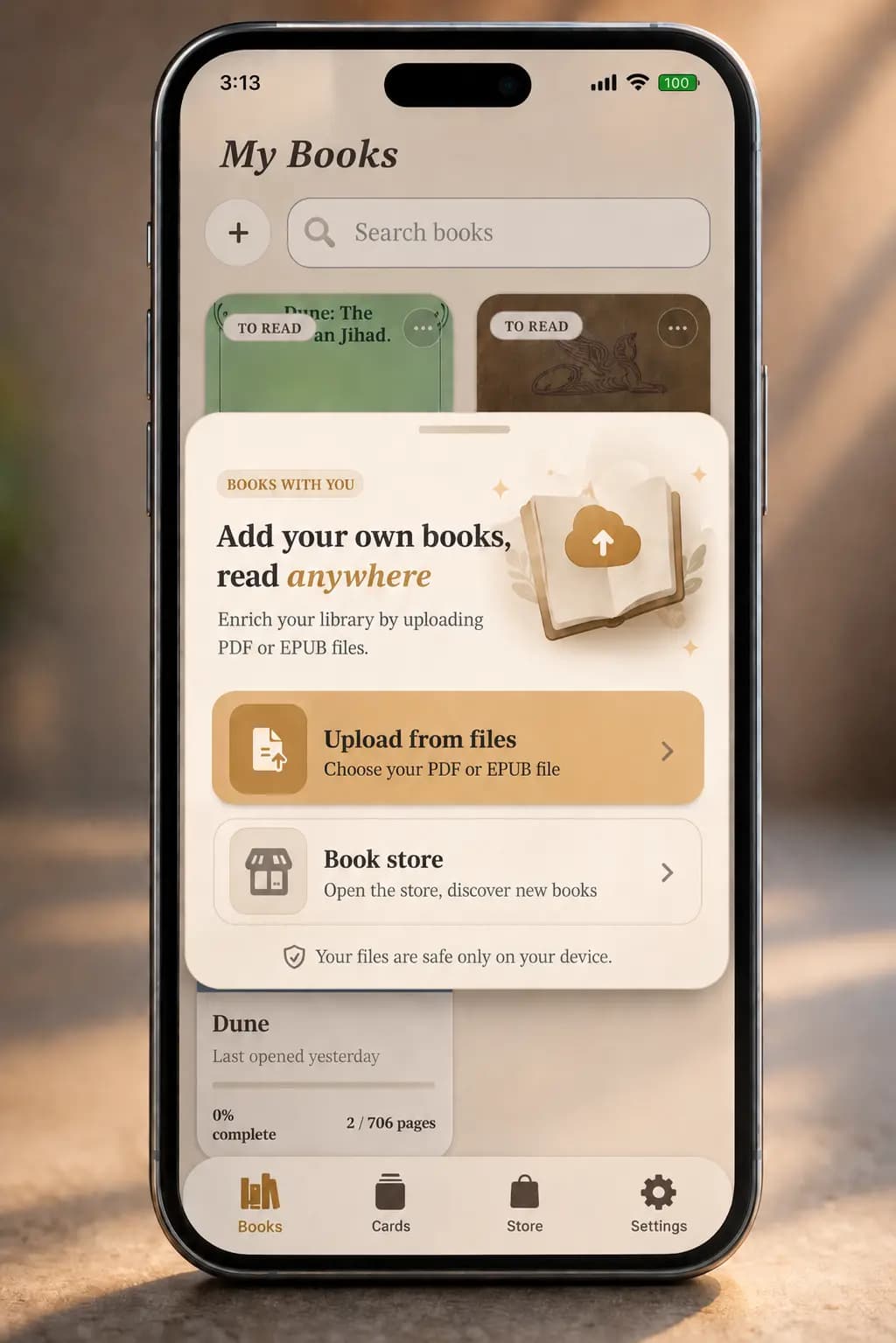
Okuzeka was built for exactly that: free English books by level, a tap on any word for its meaning in that sentence, and flashcards that keep the sentence where you found the word.